top of page

Policy Suff

Public·11 members

Pinned Post

Jet Fuel

If the current administration were to write the U.S. tight oil sector a blank check it could not bring on significantly more oil supply until August, six months from now.


In the meantime, the SPR is dangerously low with only a portion of 414 MM BO actually usable.


The current administration has only added 20 MM BO to the SPR in the 13 months it's been in charge, in spite of average WTI prices for the period of $64.13 per BO.
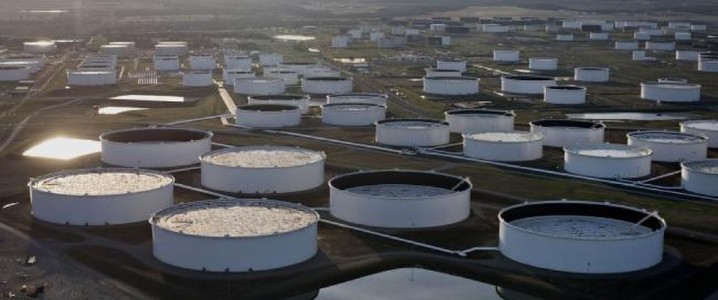


Inventories are up and down, currently up.


278 Views

Oil Prices

Oil this morning is to a little south of $67, up $9 per BO in the past 90 days. Most of this is based on fear of geopolitical escalations with Iran; let's be clear, POTUS is not going to stand for oil prices above $65, at the highest. He wants oil prices in the low 50s and does not care what it does to the domestic oil industry in America.


Vance yesterday told his audience in Wisconsin that oil prices were way down thanks to Drill Baby, Drill. Ain't buyin' THAT, sorry. The small incremental increases in U.S. production the past year are some due to longer laterals in the Permian, that decline 90% in 3 years, and GOM increases that are coming online after being drilled three and four years ago. Otherwise, OPEC is to thank, or blame, for lower oil prices.


My "party" is absolutely full of ca-ca…

283 Views
dckpttn
4 days ago

Agreed. Drill baby drill is going to backfire on Trump.

Where WILL We Be Without U.S. Shale Oil?

Click Image to Read
Click Image to Read
“That benefit of shale deflation has allowed us to pursue an expansionist monetary policy. We have cheaper capital for business, which has allowed business to drive economic growth that build amazing businesses, pursue clean energy policies and consumers have money in their pocket,” West said.

I don't buy the quote, save to say an expansionist monetary policy and cheaper capital did indeed lead to the entire shale oil phenomena, beginning 2014. For the record, some $300 B of monetary losses have occurred within the sector, to date, and there is another $200 B of debt, at least, still outstanding in the U.S. shale sector. It was built on and still relies on...debt.


14 B barrels of Permian tight oil have been exported to foreign countries, below costs. If it was exported at costs, or at a profit, the shale oil industry would be out of debt, right? Debt is NOT…


261 Views
Mike
Mike
4 days ago

Thank you, Steve. I cannot open the link you provided but I get your drift and am not surprised many people think that about tight oil and tight gas debt, that it's paid off.


There have been a number of analyses made over the years about "free cash flow, that the sector was going to pay all its debt back and be able to work from net cash flow henceforth...the tight oil sector itself has suggested that about itself. Remember 2023 Bloomberg suggesting the tight oil sector was going to make $240B? It actually made about $80B and that was the best year in its existence.


It's actually quite easy to research debt for public tight oil and gas companies, it less than 30 minutes you can find debt from 40 corporations. You'll see that debt has been increasing across the sector, not decreasing. They are borrowing more money, not just deferring deleveraging, to pay dividends and buy shares back.


The thing is when you consider what price oil has to be for the sector to make ENOUGH money to pay this debt back, the only model that works is that the sector stop drilling wells completely and liquidate itself. Even then its touch and go whether it can generate net revenue to pay its debt and clean up its mess. That's at $62 WTI on the NYMEX.


Not very many people know how business works and particularly how oil and gas well economics work, financing and proper accounting works in the oilfield. 90% of what is said is based on lies and half-truths. The shale sector is well aware of this and takes great advantage of it.


Shale development occurred, and still exists today, squarely on the back of massive amounts of debt.


Thank you again for the compliment and for reading.

Water management in the face of possible future shortages

In short: will water crises lead to policies which further inflate the costs of, and limit the suitable locations for oil production?


My understanding is that increasing amounts of produced water with limited ability to recycle must be disposed of and Texas gets to deal with it.


Between decreasing water availability, an oil industry in deep debt while forcing taxpayers to clean after itself, while water shortages in Texas are expected in 5 years, this seems to me like an economical and ecological PR nightmare waiting to happen.

https://www.houstonchronicle.com/business/energy/article/zombie-wells-toxic-waste-taxpayer-cost-18001336.php


Given this, do we have precedent for the restriction of industrial water use impacting oil production, and their economic implications?


710 Views
This comment was deleted.

The SPR & U.S. Energy Security


U.S. Energy Security


What is there to be learned from this quote about the Strategic Petroleum Reserve (SPR) and our nation's energy security from the Heritage Foundation press release, above?


  • Its author was born in Great Britain, is an economist, not a U.S. "energy (oil & natural gas) expert" and works for a Republican think tank.

  • Since President's Biden's disastrous draining of the SPR for political reasons, President Trump has managed to "refill" the SPR by just 18.65 MM BO the past 11 months...

    ...in spite of the average price of WTI in America being less than $63 in 2025, the lowest in three and one half (3 1/2) years...


335 Views
dckpttn
Feb 06

Economists never think there is any problem. Their slogan is "What, me worry?" Old farts will recognize the slogan from Mad Magazine. It was supposed to be satire, not an operating manual. Ever since peak oil in 2005 got obliterated in a flood of shale oil, everyone thinks oil and gas will last forever. Here comes the screw.

    bottom of page