
Fluid Catalytic Cracking Part 2
This is a belated follow up to my last posting on Fluid Catalytic Cracking (FCC). My health is still a limitation and I have also have to work. In this post I will explain more on the innovations both in equipment design and catalyst technology.
Over the past 40 years FCC designs have proliferated with new innovations to increase flexibility of operation and widen the product scope.
FCC’s are primarily a gasoline machine that also produces some olefinic LPG and a rather poor quality diesel fraction. There is now significant progress being made with new FCC designs that increase feedstocks for petrochemical production, boost gasoline octane, and process poorer quality feedstocks, including atmospheric residue. New catalysts have been developed that can work in conjunction with new hardware designs, that dramatically widen the operating envelope.
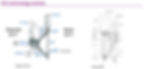
Huge leaps in catalyst technology have been made that can extend the life of the catalyst, tolerate metals poisoning, and crack heavier residues, as well as promoting maximum olefines production for the production of propylene and/or alkylate (octane blend component).

The catalyst regeneration is achieved by adding combustion air to the regenerator which burns the coke that forms on the catalyst. One of the limitations of the coke burn is the amount of air that can be added to the regenerator. If the feed to the reactor contains too much coke precursors it may not be possible to burn off all of the coke, resulting in the FCC output being reduced. One way of solving this problem is to increase the burn off rate by adding oxygen to the air source. The oxygen in the burn off air can be raised to about 28% by volume, nearly a 50% increase in available oxygen, which permits a higher coke burn.
For even heavier feeds the amount of coke production may exceed the temperature limits of the catalyst and regenerator itself. This can be overcome with a two-stage regenerator where the initial burn off is followed by a second burn-off that keeps the temperatures under the maximum limit. The exhaust gas from the regenerator is often routed to an expander turbine which can power an air blower or generate power. The exhaust gas finally goes through an electrostatic precipitator to capture catalyst fines. The catalyst is mildly abrasive and can erode parts of the plant. The cyclones are at risk as is the slide valve
Co -catalysts such as ZSM 5 can be added to the main Zeolite catalyst which enhance light olefine production, increasing proplyene to up to 20% and iso and n-butenes to up to 15%, an increase of almost 100% over the typical FCC. However, any increase in light olefines production comes at the expense of gasoline production, and not all FCC units can be modified to handle the increased light olefine flows without costly upgrades to the wet gas compressor and the gas handling system. When operating in a high light olefines mode it is essential that certain cracking reactions are minimised. A reaction called a hydride shift, is a reaction between olefines and naphthenes that results in hydrogen shifting to saturate the olefinic double bond resulting in the formation of paraffins and aromatics. For gasoline production such reactions can be useful, but for petrochemical production these reactions are minimised.
There are a number of ways to increase the olefines production as well as using ZSM 5 co-catalyst. Increasing the catalyst : oil ratio (C:O) boosts the production of olefines, particularly in the gasoline range product which also increases the riser reactor temperature. Recycling the gasoline range fraction back to the main riser also induces more cracking to light olefines. Hardware options include a recycle stream of FCC gasoline to the main riser or second smaller riser optimised to crack gasoline line range products- also known as the dual riser solution.
One of the issues with riser cracking is that gravity acts upon the catalyst and there is back mixing. Over the past 30 years there has been much interest in down flow catalytic cracking ( referred to as downer cracking). The concept is fairly easy to follow in that the catalyst is mixed in a downward flowing feed stream. To date only one of these FCC’s has been commissioned on the Satorp refinery in Jubail Saudi Arabia and is set up to produce high outputs of propylene and olefinic C4’s (butenes).


Another recent trend is to couple an FCC with a hydrocracker , the hydrocracker being used as a feed pre-treater that upgrades the quality of the FCC feed and improves yield and product quality.
Hydrocracking can allow the use of a lower quality feedstock, or extend the boiling range of the feedstock or both. Some new FCC units are now fed with hydrotreated atmospheric residue, eliminating the vacuum distillation unit in the refinery ( in my opinion risky). Two such refineries are the Dangote Refinery in Nigeria and the Petronas refinery in Johor Malaysia. Such a configuration suits light sweet crude, but can also be used on medium crudes with low metals content.
FCC catalysts need constant additions and withdrawals to maintain activity. An equilibrium is achieved whereby the addition of fresh high activity catalyst is balanced by the withdrawal of equilibrium catalyst (Ecat). Withdrawn Ecat is disposed of and can contain significant levels of Ni and V. Metal traps are frequently integrated into the catalyst which de-activate the Ni and V, both of which reduce liquid yields by producing off-gas. Depending on the cracker size and the type of feed a modest FCC can consume 10-15 mt of fresh catalyst per day and have 300-350 mt of catalyst in circulation. FCC catalyst is a major spend for a refinery and there is intensive competition between vendors. Spent catalyst is frequently added to an FCC to control activity. This might occur when a feed change takes place. There is an active market for spent FCC catalyst, especially during start-up and commissioning when fresh catalyst would be too active. On the FCC site block there is normally a hopper for fresh catalyst and Ecat. The rate of catalyst addition is controlled by a slide valve in the regenerator outlet which can be opened or shut in to control the rate of catalyst addition to the fresh feed. The slide valve is prone to wear.
Follow this link to see how things can go wrong. Exxon Torrance CA FCC fire 2015. Well worth a watch
The catalyst itself is a miracle of chemistry. The zeolite structure is very porous and contain a high surface area. The catalyst is like a fine powder, resembling icing sugar and the active component is composed of zeolite (made up of silicon, aluminium and oxygen). The FCC zeolite catalysts are acidic and can undergo ion exchange which modifies the properties and can influence the final products such as gasoline RON, total gasoline yield, olefines yield, and residue cracking ability. The actual catalyst particle is made up of zeolite matrix system, clay and binder. The FCC catalyst has a huge surface area, of the order of 150 square metres per gram ( no that is not a misprint) according to the BET method, and bulk density of about 0.8g/cc. During operation the catalyst particles can fracture and catalyst fines can be lost to the exhaust gas of the regenerator.

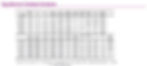
Some FCC units recycle the heavy gas oil called light cycle oil. The gain in yield is often minimal and LCO increases the coke on catalyst. As FCC units are regarded as a carbon out process, there is a no way of adding hydrogen to saturate double bonds which makes ring structures hard to open. In such structure the sides chains are removed but the ring structure survives very much intact. For this reason FCC’s are limited to producing gasoline type cuts and light olefines.
A limitation on how a conventional FCC can be pushed to produce more C3’s and C4’s lies in the gas concentrator unit. The gasoline and LPG go overhead in main fractionator and the LPG is compressed by the wet gas compressor which has a physical capacity limit. The only was to increase the LPG production is to upgrade the Wet gas compressor and gas concentration unit. This can be very expensive. The alternative is to reduce the fresh feed flow and work within the limits of the existing gas concentration unit.

Looking to the future, the development of the FCC is likely to continue but more of the output will be directed to the production of petrochemical feedstocks. So far the processing of bio feedstock has been limited. One attempt operate an FCC with wood chips in Mississippi was a spectacular bust. The company was called Kior and was financed by Vinod Khosla. In 2018 I was speaking at a conference in Poland and came across an ex Kior employee. He confirmed that the problem with wood chip pyrolysis was down to calcium, which happens to be the main element in wood chip ash. There is no economic route to reducing the calcium level in wood chip. The link below gives and insight to Kior and its “problems”. The problem with cellulose is that it contains a lot of oxygen which has to be eliminated either as water or as carbon dioxide. That means the amount or yield of valuable products is small relative to the feed flow. 10% by weight on feedstock is not uncommon for bio feedstocks yields.
https://advancedbiofuelsusa.info/kior-the-inside-true-story-of-a-company-gone-wrong/
Despite all of the hype around EV’s the demand for hydrocarbon fuels is not likely to decline significantly any time soon. Gasoline demand is likely to remain robust for at least another decade, and petrochemical demand is unlikely to decline. Whether or not bio-feedstocks will eventually be possible in FCC units is open to debate. I personally do not think the problems can be overcome economically. There are many great things that we can do with chemistry, but not all of them make sense.
This concludes the FCC. The next topic will be hydrocracking which involves hydrogen, high pressures, and very different products to the FCC. If you have any questions then please make a comment and I will do my best to answer. A sanitized file of the presentation is attached.